

Why Javanese Customs and Etiquette Remain Forever Relevant
Amidst the rush of the digital era, the life principles and etiquette (unggah-ungguh) of Javanese culture offer a moral compass that will never expire.
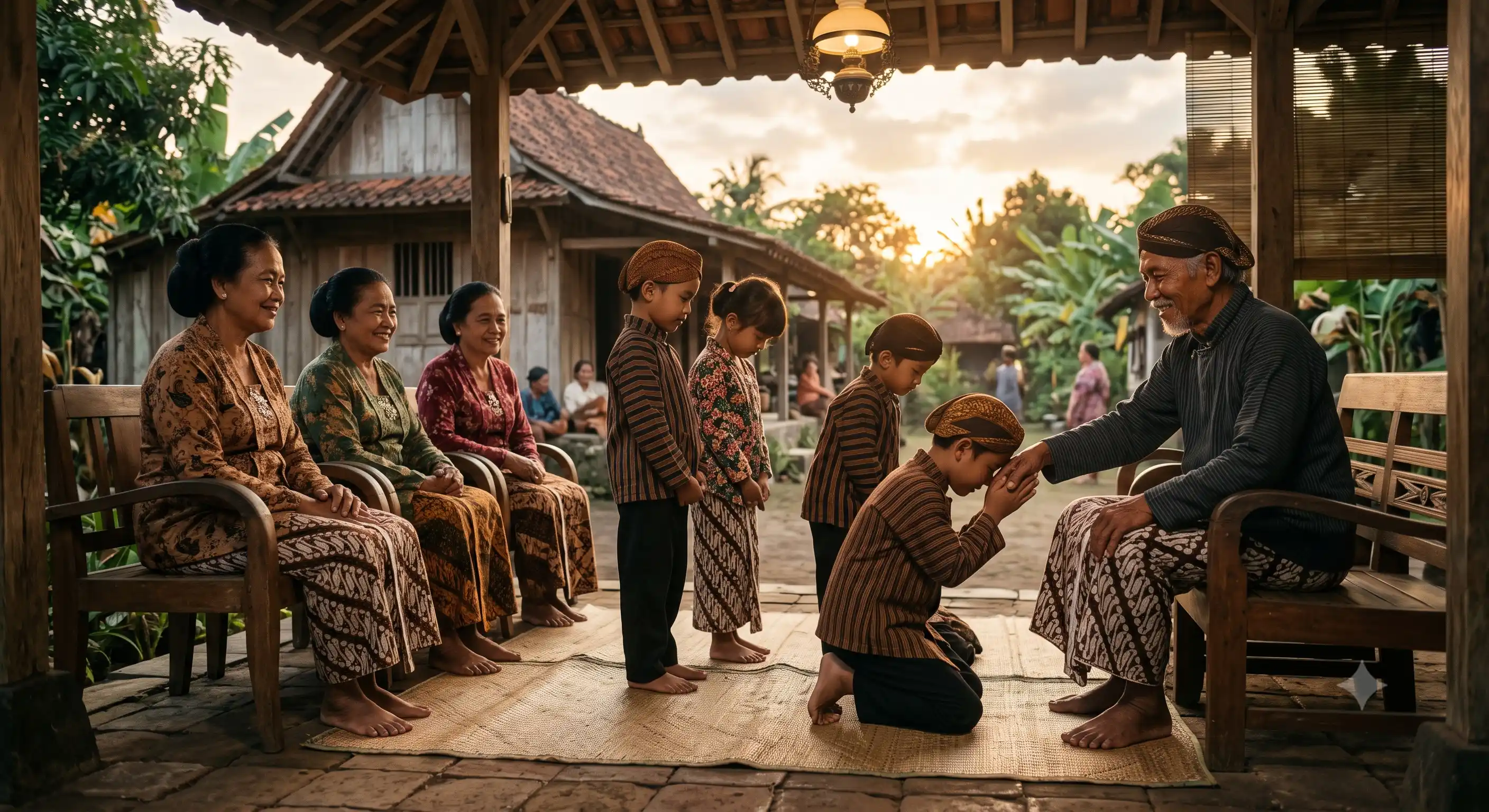
The world may change, and technology may evolve at lightning speed, but the essence of being a complete human being remains the same. Amidst the rush of the digital era, the life principles and etiquette (unggah-ungguh) of Javanese culture offer a moral compass that will never expire. These values are not merely ancient traditions; they are the art of living with mindfulness and respect.
Here are some Javanese philosophies and etiquettes that will remain relevant for eternity:
1. Unggah-Ungguh (The Art of Respectful Communication)
In Javanese culture, the way we speak defines who we are. Unggah-ungguh dictates how we position ourselves in front of others—using refined language (Krama Inggil) to honor elders and casual language (Ngoko) for peers.
-
Modern Relevance: In the social media era, where comments can be sharper than a sword, the proverb ajining diri dumunung ing lathi (a person's worth lies in their speech) serves as a crucial reminder to maintain communication ethics, both verbally and digitally.
2. Tepa Selira (Empathy and Tolerance)
Tepa selira literally means "measuring a garment against one's own body." It means before you pinch someone else, feel whether that pinch hurts if inflicted upon yourself.
-
Modern Relevance: In an increasingly polarized world, the ability to put oneself in another's shoes is the key to social peace. It is the very foundation of universal tolerance.
3. Alon-Alon Angger Kelakon (Mindful Progress)
This philosophy is often misunderstood as an excuse for laziness. In reality, its true meaning is to prioritize safety, precision, and thoroughness over rushing blindly into fatal mistakes.
-
Modern Relevance: In today's "hustle culture" that demands instant results, alon-alon angger kelakon is a vital reminder to practice mindfulness, protect mental health, and appreciate the process without losing one's direction.
4. Andhap Asor (Humility and Harmony)
Javanese people deeply avoid open conflicts that could disrupt social harmony (rukun). The attitude of andhap asor (humility) and avoiding flashy displays of wealth or power are key to respecting others' feelings.
-
Modern Relevance: Harmony is the greatest social asset. Humility prevents us from the arrogance that frequently triggers division in modern society.
Conclusion: Javanese customs are not about traditional attire or rigid ancient rituals. They are about character. As long as humanity still requires respect, peace, and meaningful connections, Javanese etiquette will always find its rightful place in the future.